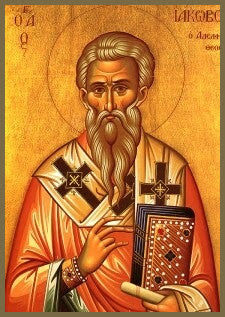
The Church Fathers: The Church Is One & Visible

Ecclesiology 

There is one body and one Spirit, just as you were called to the one hope of your
calling, one Lord, one faith, one baptism, one God and Father of all,
who is above all and through all and in all.
Ephesians 4, 4-5

My explications of the Patristic texts

Tertullian (A.D. 197)
Apology, 39:1

“I shall at once go on to exhibit the peculiarities of the Christian society, that, as I have refuted
the evil charged against it, I may point out its positive good. We are a body knit together by a
common religious profession, unity of discipline, and the bond of a common hope. We meet
together as an assembly and congregation, offering up prayer to God with united force, and we
may wrestle with Him in our supplications. This violence God delights in…We assemble to read
our sacred writings if any peculiarity of the times makes either forewarning or reminiscence
needful. However it be in that respect, with the sacred words we nourish our faith, we animate
our hope, we make our confidence more steadfast; and no less by inculcations of God’s precepts
we confirm good habits.”

In this passage, Tertullian, an early Christian theologian, emphasizes the unique characteristics and benefits of the Christian community. He begins by acknowledging the criticisms directed at it but quickly pivots to highlight the positive aspects that define Christian society.

Tertullian describes Christians as a "body" united by shared beliefs and practices. This suggests a deep sense of camaraderie and collective identity that transcends individual differences. The mention of "common religious profession" underscores the foundational role faith plays in bringing members together, while “unity of discipline” implies a commitment to shared moral and ethical standards.

The gathering of Christians for prayer illustrates the importance of community in their spiritual life. Tertullian notes that they come together to "offer up prayer to God with united force," suggesting that collective prayer is more powerful and meaningful than individual prayers. This idea of wrestling with God in prayer conveys a sense of passionate and earnest devotion, indicating that such fervency is a way to engage deeply with the divine.

The author highlights the practice of reading sacred writings, indicating that scripture is central to the Christian experience. He suggests that this reading serves as a way to reflect on current circumstances—either by providing warnings or reminding the community of their beliefs. It shows the dual role of scripture in both guidance and comfort. Moreover, the passage underlines the role of sacred texts in "nourishing" faith and "animating" hope. This metaphor implies that just as food sustains the body, so too does scripture nurture the spirit, making belief more robust and hope more vibrant. 

Tertullian emphasizes that Christians can cultivate good habits through the teachings of God’s precepts. This highlights the practical implications of their faith, suggesting that belief should lead to moral living and ethical behavior. The confirmation of good habits indicates a transformative aspect of religion that actively shapes individual character and community standards.

Overall, Tertullian captures the essence of Christian life as one that is deeply communal, rooted in prayer and scripture, and aimed at fostering both individual and collective growth in faith and morality. His work promotes a positive vision of Christianity as a source of strength, hope, and good conduct.

Origen (A.D. 244)
Commentary on Matthew, Tract 30

“We are not to give heed to those who say, Behold here is Christ, but show him not in the Church,
which is filled with brightness from the East even unto the West; which is filled with true light; is
the ‘pillar and ground of truth’; in which, as a whole, is the whole advent of the Son of Man, who
saith to all men throughout the universe, ‘Behold, I am with you all the days of life even unto the
consumption of the world.’”

This excerpt from Origen's Commentary on Matthew emphasizes the importance of recognizing Christ's true presence within the Church rather than being swayed by individuals who claim to have found Him elsewhere. The phrase "Behold here is Christ" suggests that some may present alternative interpretations or locations for encountering Christ, but the author warns against these distractions.

By describing the Church as "filled with brightness from the East even unto the West," Origen conveys a sense of divine illumination and truth that permeates the entire faith community. This imagery highlights the universal nature of Christ's presence in the Church, suggesting that true enlightenment and guidance come from within its teachings and traditions.

The designation of the Church as the "pillar and ground of truth" reinforces its foundational role in preserving and proclaiming Christian beliefs. This metaphor indicates stability and support for the faith, underscoring the idea that the Church is essential for understanding the true nature of Christ and His teachings.

Finally, the reference to the advent of the Son of Man and His promise to be present "all the days of life even unto the consumption of the world" conveys a message of hope and reassurance. It suggests that Christ's presence is not confined to a specific moment in time or place but is a continual source of strength and guidance for believers throughout their lives and beyond.

Overall, Origen encourages followers to remain steadfast in their faith and to seek Christ through the Church, which holds the fullness of truth and divine presence.

Cyprian of Carthage (A.D. 251)
On Unity, 6

“The spouse of Christ cannot be adulterous; she is uncorrupted and pure. She knows one home;
she guards with chaste modesty the sanctity of one couch. She keeps us for God. She appoints the
sons whom she has born for the kingdom. Whoever is separated from the Church and is joined to
an adulteress is separated from the promises of the Church, nor can he who forsakes the Church of
Christ attain the rewards of Christ. He is a stranger; he is profane; he is an enemy. He can no
longer have God for his Father, who has not the Church for his mother. If anyone could escape who
was outside the ark of Noah, then he also may escape who shall be outside of the Church. The
Lord warns, saying, ‘He who is not with me is against me, and he who gathereth not with me
scattereth.’”

Cyprian's "On Unity" is a pivotal work that addresses the nature of the Church and the importance of unity among Christians. In this treatise, Cyprian emphasizes that the Church is the Body of Christ, and its unity is essential for the faithful's salvation.

One key theme is the concept of the Church as the "spouse of Christ," which Cyprian describes as pure and unadulterated. This metaphor highlights the sanctity and commitment expected from the Church and its members. The Church is portrayed as a protector of its members, safeguarding their faith and guiding them toward a relationship with God.

Cyprian argues that separation from the Church equates to separation from Christ and, consequently, from salvation. He stresses that those who turn away from the Church are not merely choosing a different path but are placing themselves outside the grace and promises that come from being part of God's community. This idea reinforces the notion that the Church is essential for a believer's spiritual life and relationship with God.

The mention of Noah's ark serves as a significant metaphor for the Church's role as the vessel of salvation. Just as those outside the ark perished during the flood, so too will those who distance themselves from the Church face spiritual peril. This allegory underlines the urgency of remaining within the communal bounds established by God.

Cyprian's assertion that "he who is not with me is against me" highlights the dichotomy in Christian life: one must be actively engaged in the Church to be aligned with Christ. This call to unity is not just about avoiding division but also about actively contributing to the collective mission of spreading the Gospel.

Overall, "On Unity" strongly urges Christians to recognize the Church's importance and remain steadfast in their faith. Cyprian's reflections on unity, community, and the Church's necessity continue to resonate, providing a framework for understanding the relationship between individual believers and the larger body of the Church throughout Christian history.

Hilary of Poitiers (A.D. 355)
Commentary on Matthew 5:13

“But neither should a lamp, once it is lit, be concealed under a bushel. What benefit is possessing
something that provides light in a concealed area? Yet the Lord appropriately compared a bushel
to the synagogue, which maintained a sure means of measuring all its observances as it eagerly
welcomed the fruits that were brought. Despite all the fruit that was brought, it was empty,
though not capable of hiding the light. And thus, the lamp of Christ should not be hidden under a
bushel or under the concealing cover of the synagogue. Rather, it is highlighted in his sufferings
on the tree, offering eternal light to those who will dwell in the Church. In a similar light, the
apostles are also admonished to sign so that in admiration of their works, praise may be rendered
to God.”

The commentary by Hilary of Poitiers reflects on Jesus' metaphor of a lamp and its significance in relation to faith and public witness. He emphasizes the importance of visibility in displaying one's faith, likening it to a lamp that must shine rather than be hidden under a bushel. This idea stresses that the teachings and sacrifices of Christ should not be concealed but rather showcased for others to see.

Bishop Hilary points out that the synagogue, while a place of worship, can sometimes become a metaphorical bushel when it fails to fully embrace the light of Christ. Despite its role in observing traditions and rituals, if it does not allow the transformative light of Christ to shine forth, it risks becoming empty and ineffective. This imagery serves as a critique of religious practices that do not inspire true faith or connection to God's light.

Further, he encourages the faithful in the form of apostles to act as beacons of light through their works and deeds so that their lives may lead others to praise God. Their visible faith and the manifestation of Christ’s light through their actions should inspire others to seek the same light. In essence, this commentary is a call to action for believers to let their faith be known and to live in a manner that reflects the light of Christ, bringing hope and inspiration to those around them.

Basil the Great (A.D. 375)
Commentary on Isaiah, 2:66

“‘And in the last days the mountain of the house of the Lord shall be prepared on the top of the
mountains’ The house of the Lord, ‘prepared on the top of the mountains,’ is the church, according
to the declaration of the apostle, ‘Know,’ he says, ‘how thou oughtest to behave thyself in the
house of God, which is the church of the living God’ Whose foundations are on the holy
mountains, for it is built upon the foundation of the apostles and prophets. One also of these
mountains was Peter, upon which the rock the Lord promised to build his church.”

Basil's commentary on Isaiah often explores the themes of prophecy, divine judgment, and the establishment of God's kingdom. He emphasizes the significance of the prophetic words regarding the mountain of the house of the Lord, which can be interpreted as the establishment of the church.

In the context of Isaiah, Basil likely highlights the idea that the mountain represents a place of worship and refuge, symbolizing God's presence among His people. The imagery of a mountain signifies stability and prominence, suggesting that the church is meant to stand out as a beacon of hope and faith in a world that may often seem chaotic.

The author also delves into the importance of the church's foundation, drawing connections to the apostles and prophets mentioned in the original text you provided. He affirms that the church is built upon the teachings and sacrifices of early church leaders, with Peter as a pivotal figure, reinforcing the idea that Christ established His church on a solid, divinely ordained foundation.

Furthermore, he suggests how this establishment on holy mountains calls believers to holiness and a higher standard of living, aligning their lives with the teachings of Christ and the early church. Basil would affirm the idea that through the church, believers are invited into a transformative relationship with God, moving them from mere followers to active participants in the divine plan.

Overall, Basil's commentary would underscore the theological implications of Isaiah's prophecy for the church and the believer's role within it, emphasizing both its establishment and its purpose in God's overarching narrative for humanity.

Augustine of Hippo (A.D. 400)
Answer to Letters of Petilian, 2:38

“Petilianus said: ‘If you declare that you hold the Catholic Church, the word ‘catholic’ is merely the
Greek equivalent for entire or whole. But it is clear that you are not on the whole because you
have gone aside into the part.’ Augustine answered: I too indeed have attained to a very slight
knowledge of the Greek language, scarcely to be called knowledge at all, yet I am not shameless
in saying that I know that means not ‘one,’ but ‘the whole;’ and that means “according to the
whole:” whence the Catholic Church received its name, according to the saying of the Lord, ‘It is
not for you to know the times, which the Father hath put in His own power. But ye shall receive
power, after that the Holy Ghost is come upon you: and ye shall be witnesses unto me both in
Jerusalem, and in Judea, and in Samaria, and even in the whole earth.’ Here you have the origin of
the name ‘Catholic.’”

In Augustine's response to Petilianus, he engages with the meaning of the term "Catholic" and its significance in relation to the Church. Petilianus claims that by identifying themselves as part of the Catholic Church, they are implying a sense of universality or wholeness that Augustine's group does not possess, suggesting that they have deviated into a "part" rather than embracing the entirety of the Church.

Augustine counters this assertion by highlighting the Greek origin of the term "catholic," which indeed translates to "whole" or "entire." He acknowledges his limited knowledge of Greek but confidently asserts that the term signifies an encompassing unity. By employing a biblical reference, Augustine underscores the mission of the Church as intended to reach all corners of the earth, which further supports the idea of the Church being "whole." 

He references the words of Jesus that highlight the apostles' role as witnesses to the gospel in various regions, symbolizing a broad mission. This reference not only emphasizes the universality of the Church but also legitimizes its identity as "Catholic" in contrast to sectarian groups.

In short, Augustine’s answer defends the legitimacy of the term "Catholic" by explaining that it refers to a complete and universal Church, countering Petilianus's argument that divides the Church into fragments.


Cyril of Alexandria (ante A.D. 429)
Commentary on Isaias

“For the church is lofty, conspicuous, and well known to all men everywhere. It is also lofty in
another sense, for her thoughts have nothing earthly, but she is above all that is earthly and,
with the eyes of the understanding, looks upon, as far as it is possible, the glory of God and
glories in doctrines truly exalted, concerning God … Wherefore, with justice may the house of God
be called a mountain (known) by the understanding, and it is perfectly visible, as being raised
upon the hills; and one may say of it, and with great cause, what as a notable illustration was
uttered by the mouth of the Saviour: ‘A city placed upon a hill cannot be hidden’”

Cyril's Commentary on Isaias provides a profound exploration of the themes and messages contained within the book of Isaiah in the Old Testament. Cyril often emphasizes the significance of prophecy and the role of the Messiah, focusing on the ways in which Isaiah's words prepare the way for Christ.

Cyril highlights how the prophecies of Isaiah are not merely historical predictions but are fulfilled in the life and mission of Jesus Christ. He elaborates on specific passages that point directly to the coming of the Messiah, his birth, suffering, and ultimate victory over sin. In his commentary, Cyril reflects on the attributes of God emphasized in Isaiah's writings. He discusses God's holiness, justice, and mercy, revealing how these attributes interplay throughout the biblical narrative and how they are ultimately revealed in Christ.

Further, the author draws on the imagery from Isaiah to illustrate the elevation and visibility of the Church, akin to a mountain that stands high above the landscape. This metaphor signifies the Church's role as a beacon of light and truth, guiding believers toward a deeper understanding of God.

Cyril emphasizes the moral teachings found in Isaiah, urging readers to live in accordance with God's will. He interprets Isaiah's calls for justice, righteousness, and repentance as timeless appeals relevant to the Christian community.

Finally, a recurring theme in Cyril’s commentary is the hope of restoration. He emphasizes that despite present trials and tribulations, Isaiah’s prophecies anticipate a future where God will restore His people and establish peace and justice.

Cyril's Commentary on Isaias serves as a theological reflection that intertwines themes of prophecy, the nature of God, the role of the Church, and the call to lead a righteous life. All of these themes culminate in the hope brought by Christ's redemptive work. This commentary not only helps believers understand the text but also encourages them to embody the truths it presents.

He that is not with me is against me:
and he that gathers not with me scatters.

Luke 11, 23

Pax vobiscum

The Church Fathers: Apostolic Succession

 Ecclesiology

After more fasting and prayer, the men laid their hands on them and sent them on their
way. They commissioned them. In that circle of intensity and obedience, fasting and
praying, they laid hands on their heads and sent them off.
Acts 13:3 

Neglect, not the grace that is in thee, which was given thee by prophecy,
with the imposition of the hands of the priesthood.
1 Timothy 4, 14

For which cause I admonish thee, that thou stir up the grace of God which is in thee,
by the imposition of my hands.
2 Timothy 1, 6

My explications of the Patristic texts

Clement of Rome (A.D. 98)
Epistle to Corinthians, 42, 44

“And thus preaching through countries and cities, they appointed the first fruits [of their labors],
having first proved them by the Spirit, to be bishops and deacons of those who should afterward
believe. Nor was this any new thing, since many years before it was written concerning bishops
and deacons. Thus saith the Scripture a certain place, ‘I will appoint their bishops in righteousness
and their deacons in faith.’… Our apostles also knew, through our Lord Jesus Christ, that there
would be strife on account of the office of the episcopate. For this reason, therefore, since they
had obtained a perfect fore-knowledge of this, they appointed those [ministers] already
mentioned, and afterward gave instructions, that when these should fall asleep, other approved
men should succeed them in their ministry…Our sin will not be small if we eject those who have
blamelessly and holily fulfilled its duties from the
episcopate.”

Clement of Rome’s text emphasizes the establishment and continuity of church leadership through the appointment of bishops and deacons. It reflects an understanding of church governance that is rooted in the guidance of the Holy Spirit and recognizes the importance of maintaining order and authority within the community of believers.

Clement acknowledges that the practice of appointing bishops and deacons is not new, indicating a continuity with earlier traditions within the church. This establishes a sense of legitimacy and historical precedent for their roles. The author highlights that the apostles acted under the guidance of Jesus Christ and the Holy Spirit when appointing these leaders. This underscores a belief that their decisions were divinely inspired and thus inherently valid.

Bishops and deacons are chosen based on their spiritual testing and qualifications, suggesting that leadership within the church requires not only capability but also a strong character aligned with Christian values. This reinforces the idea that leaders should be examples of faith and righteousness. Clement states that upon the death of appointed leaders, other approved individuals should take over their responsibilities. This succession plan ensures stability and continuity in church leadership, preventing chaos or division following the departure of established leaders.

The text warns against removing those who have faithfully served in their roles, emphasizing the significance of their contributions and the dangers of disrupting the established order. It highlights the importance of honoring tradition and preserving the ministry's integrity.

Overall, Clement’s text serves both as a historical reflection on early church governance and as a practical guide to maintaining leadership within the Christian community, emphasizing the importance of spiritual discernment and the continuity of apostolic succession.

Hegesippus (A.D. 180)
Memoirs, fragment in Eusebius Ecclesiatical History, 4:22

“Hegesippus, in the five books of Memoirs which have come down to us, has left a complete
record of his own views. In them, he states that he met many bishops on a journey to Rome and
received the same doctrine from all. It is fitting to hear what he says after making some remarks
about the epistle of Clement to the Corinthians. His words are: ‘And the church of Corinth
continued in the true faith until Primus was bishop in Corinth. I conversed with them on my way
to Rome and abode with the Corinthians for many days, during which we were mutually refreshed
in the true doctrine. When I came to Rome, I remained there until Anicetus, whose deacon was
Eleutherus. Anicetus was succeeded by Soter and Eleutherus. In every succession, and in every city
that is held which is preached by the law and the prophets and the Lord.’”

In this passage, Hegesippus, a prominent early Greek church historian, vividly narrates his pilgrimage to Rome, a journey marked by significant encounters with various bishops who served as vital links in the early Christian community. He eloquently underscores the remarkable consistency of the teachings he received from these bishops, highlighting not only their individual wisdom but also the collective adherence to a unified doctrine that transcended regional differences. Hegesippus particularly reflects on his time with the Corinthians, describing their fervent gatherings in which they passionately reinforced one another in the true doctrine of Christ, emphasizing the strength of their faith amid challenges. 

The narrative poignantly illustrates the critical importance of preserving the true faith through oral and written traditions, the unbroken continuity of doctrinal teachings across diverse cities, and the succession of bishops who played a pivotal role in maintaining ecclesiastical unity. Through his experiences, Hegesippus conveys a powerful message about the need for vigilance in safeguarding the integrity of early Christianity, highlighting the enduring bonds that formed a cohesive church despite geographical and cultural divides.

Irenaeus of Lyons (A.D. 180-189)
Against Heresies, 4:33:8

"True knowledge is that which consists in the doctrine of the apostles, and the ancient
constitution of the Church throughout all the world, and the distinctive manifestation of the body
of Christ according to the successions of the bishops, by which they have handed down that
Church which exists in every place, and has come even unto us, being guarded and preserved
without any forging of Scriptures, by a very complete system of doctrine, and neither receiving
addition nor suffering curtailment in the truths which she believes; and it consists in reading
the word of God without falsification, and a lawful and diligent exposition in harmony with the
Scriptures, both without danger and without blasphemy; and above all, it consists in the pre
eminent gift of love, which is more precious than knowledge, more glorious than prophecy, and
which excels all the other gifts of God."

According to Irenaeus, the essence of actual knowledge lies in embracing the apostles’ teachings, recognizing the Church’s time-honored framework on a global scale, and appreciating the distinct manifestation of the body of Christ through the succession of bishops. This profound knowledge is passed down through generations within the Church, remaining steadfast in its commitment to preserving the Scriptures without alteration. It represents a comprehensive and unchanging system of doctrine that remains faithful to its core beliefs. 

Furthermore, proper knowledge encompasses reading the word of God without distortion and interpreting it diligently and accurately in alignment with the Scriptures, ensuring there is no risk of blasphemy. Above all, proper knowledge is embodied by the supreme gift of love, transcending in value compared to knowledge, surpassing the splendor of prophecy, and overshadowing all other divine gifts.

Overall, the text conveys that actual knowledge is multifaceted, grounded in historical and doctrinal continuity, diligent interpretation, and primarily expressed through love. It promotes a vision of faith that is both intellectually rigorous and deeply relational.

Tertullian (A.D. 200)
Prescription against the Heretics, 33

“But if there be any (heresies) which are bold enough to plant themselves in the midst Of the
apostolic age, that they may thereby seem to have been handed down by the apostles because
they existed in the time of the apostles, we can say: Let them produce the original records of their
churches; let them unfold the roll of their bishops, running down in due succession from the
beginning in such a manner that [that first bishop of theirs] bishop shall be able to show for his
ordainer and predecessor someone of the apostles or of apostolic men,–a man, moreover, who
continued steadfast with the apostles.
To this test, therefore, will they be submitted for proof
by those churches, who, although they derive not their founder from apostles or apostolic men (as
being of much later date, for they are in fact being founded daily), yet since they agree in the
same faith, they are accounted as not less apostolic because they are akin in doctrine
Then let
all the heresies, when challenged to these two tests by our apostolic church, offer their proof of
how they deem themselves to be apostolic. But in truth, they neither are so nor can they prove
themselves to be what they are not. Nor are they admitted to peaceful relations and communion
by such churches as are in any way connected with apostles, since they are in no sense
themselves apostolic because of their diversity as to the mysteries of the faith.”

Tertullian asserts that any church claiming to be apostolic must provide evidence of its historical continuity. This includes original records that document an unbroken line of bishops leading back to the apostles or their close associates. This emphasizes the importance of succession in authority and teaching, crucial for maintaining doctrinal purity.

Tertullian critiques heretical groups that claim legitimacy simply because they existed during the apostles' time. He suggests that mere existence in the apostolic age does not confer authenticity or authority. The author proposes that all churches seeking to be considered apostolic must demonstrate a shared faith and doctrine with the truly apostolic churches. Faith, rather than just historical proximity, becomes the criterion for evaluating claims of apostolicity.

According to Tertullian, heretical groups cannot claim the title of ‘apostolic’ because they deviate in their teachings and practices. As a result, they are excluded from the communion of churches directly linked to the apostles, highlighting an essential aspect of early church identity: orthodoxy was crucial for fellowship. He concludes that no heretical group can prove its claims to be apostolic because its teachings are inherently diverse and often contradictory to the established doctrines. This reflects a broader theme in early Christianity: the struggle to define and protect ‘orthodox’ beliefs from various interpretations and teachings.

Overall, Tertullian's text defends the early church's authority and repudiates those who sought to distort its teachings. It underscores the significance of historical lineage, doctrinal agreement, and the necessity of maintaining the integrity of true Christian faith against emerging heresies.

Clement of Alexandria (A.D. 210)
Who is the rich man that shall be saved?

“And that you may still be more confident, that repenting thus truly remains a sure hope of
salvation, listen to a tale? Which is not a tale but a narrative about the Apostle John, handed
down and committed to the custody of memory. For when, on the tyrant’s death, he returned to
Ephesus from the isle of Patmos, he went away, being invited to the contiguous territories of the
nations, here to appoint bishops, there to set in order whole Churches, there to ordain such as
were marked out by the Spirit.”

Clement of Alexandria's text reflects on the themes of hope, repentance, and the authority of the Apostle John within the early Christian Church. It begins with the assurance that true repentance offers a lasting hope of salvation. The following narrative reinforces this message by recounting an episode from the life of the Apostle John. After the death of a tyrant, who likely represents oppressive rulers of the time, John returns to Ephesus from his exile on the isle of Patmos. His return signifies a new opportunity for the Church and its members, emphasizing the continuity and resilience of the Christian faith despite persecution.

Clement highlights John’s role as a leader and organizer within the early Church. His journey to appoint bishops and restore order in various Christian communities indicates the importance of structured leadership and the guidance of the Holy Spirit in the church’s development. This act of ordaining individuals who are “marked out by the Spirit” suggests reliance on divine inspiration in choosing leaders, reinforcing the idea that actual authority within the Church is rooted in spiritual rather than merely human criteria.

Overall, the text emphasizes the assurance of salvation through genuine repentance, the importance of apostolic authority, and the active role of leaders like John in nurturing and organizing the fledgling Christian communities.

Cyprian of Carthage (A.D. 250)
To the Lapsed, 1

“Our Lord, whose precepts and admonitions we ought to observe, describing the honor of a bishop
and the order of His Church, speaks in the Gospel, and says to Peter: ‘I say unto thee, That thou
art Peter, and upon this rock will I build my Church; and the gates of hell shall not prevail against
it. And I will give unto thee the keys of the kingdom of heaven: and whatsoever thou shalt bind
on earth shall be bound in heaven: and whatsoever thou shall loose on earth shall be loosed in
heaven.’ Thence, through the changes of times and successions, the ordering of bishops and the
plan of the Church flow onwards; so that the Church is founded upon the bishops, and every act
of the Church is controlled by these same rulers.”

Cyprian's text reflects on Peter's foundational role and episcopal authority within the Church. He begins by emphasizing the importance of adhering to Christ's precepts and guidance. The reference to Christ’s declaration to Peter underscores Peter's role as the foundational rock upon which the Church is built. This establishes a direct line of authority and continuity from Christ to Peter and subsequently to the bishops.

The passage underscores the idea that the Church is not merely a loose collection of believers but a structured community with ordained leaders —specifically bishops —who bear the responsibility for governance and spiritual oversight. Cyprian points out that the Church’s authority is rooted in this apostolic succession; in other words, the bishops derive their power and legitimacy from their connection to Peter and, ultimately, Christ.

The phrases about binding and loosing reflect the authority to make decisions regarding moral and doctrinal issues, suggesting that the bishops have a crucial role in interpreting and applying Christ's teachings. In essence, Cyprian argues that the integrity and unity of the Church depend on the bishops' adherence to this established order and authority. The idea that "the gates of hell shall not prevail against it" conveys a sense of divine protection over this structure, ensuring that the Church will withstand challenges throughout history.

Overall, Cyprian's text vigorously defends ecclesiastical authority and the necessity of maintaining order within the Church, rooted in a divinely appointed hierarchy.

Athanasius of Alexandria (A.D. 355)
To Dracontius, Epistle 49

“Before your election, you lived to yourself; after it, you live for your flock. And before you had
received the grace of the episcopate, no one knew you. Still, after you became one, the laity
expected you to bring them food, namely instruction from the Scriptures
If all agreed with
your present advisers, how would you have become a Christian since there would be no bishops
Or if our successors are to inherit this state of mind, how will the Churches be able to hold
together?


The epistle echoes themes characteristic of Athanasius of Alexandria, an influential 4th-century Christian theologian and bishop. This excerpt reflects on the responsibilities and transformations that accompany the role of a bishop, contrasting pre- and post-episcopal life.

Athanasius begins by emphasizing a shift in the bishop's focus from self-centeredness to communal responsibility. Before election to the episcopate, the individual might live a more individualistic life, but upon accepting the role, their existence becomes dedicated to serving their congregation ("flock"). This suggests that the bishop is expected to embody Christ's teachings and serve as a shepherd.

The mention of being unknown before the election highlights a common theme in many religious traditions: leaders often emerge from obscurity. Once they assume the role of bishop, however, the laity begins to expect them to provide spiritual nourishment, primarily through scriptural teaching and guidance ("instruction from the Scriptures"). This reflects the reciprocal relationship between clergy and congregation in the Christian community.

The text raises a crucial question about the continuity of leadership within the church. The Bishop posits that if future bishops adopted the same mindset as the present advisers, it could threaten the unity and integrity of the Church. The implication here is that a lack of strong, principled leadership could lead to fragmentation or decline in the faith. 

Athanasius lived during a time of doctrinal conflict, particularly regarding Arianism, which questioned the nature of Christ and His relationship to God the Father. His defense of Nicene orthodoxy underscores the significance of bishops not just as local leaders but as crucial figures in maintaining the core tenets of Christianity. This passage reflects his concern for ensuring that future bishops have a strong, unified understanding of Christian doctrine.

Athanasius reminds us of the communal aspect of faith. He suggests that the Church's health hinges on the character and understanding of its leaders. This notion transcends time; for churches today, it highlights the importance of wise and theologically sound leadership. 

In essence, the text emphasizes the transformative role of bishops, the expectations placed upon them by the community, and the implications of leadership on the unity of the Church. It calls for a deep sense of responsibility among bishops, not just for their personal faith but for the spiritual nourishment and guidance of their congregations.

Augustine of Hippo (A.D. 400)
To Generosus, Epistle 53:2

“For if the lineal succession of bishops is to be taken into account, with how much more certainty
and benefit to the Church do we reckon back till we reach Peter himself, to whom, as bearing in a
figure the whole Church, the Lord said: ‘Upon this rock will I build my Church, and the gates of
hell shall not prevail against it !’ The successor of Peter was Linus, and his successors in unbroken
continuity were these: — Clement, Anacletus, Evaristus, Alexander, Sixtus, Telesphorus, Iginus,
Anicetus, Pius, Soter, Eleutherius, Victor, Zephirinus, Calixtus, Urbanus, Pontianus, Antherus,
Fabianus, Cornelius, Lucius, Stephanus, Xystus, Dionysius, Felix, Eutychianus, Gaius, Marcellinus,
Marcellus, Eusebius, Miltiades, Sylvester, Marcus, Julius, Liberius, Damasus, and Siricius, whose
successor is the present Bishop Anastasius. In this order of succession, no Donatist bishop is found.
But, reversing the natural course of things, the Donatists sent to Rome from Africa an ordained
bishop, who, putting himself at the head of a few Africans in the great metropolis, gave some
notoriety to the name of “mountain men,” or Cutzupits, by which they were known.”

In this passage, Augustine emphasizes the importance of the apostolic succession of bishops to ensure the continuity and authority of the Church. He begins by referring to Saint Peter, regarded as the first pope and the rock upon which Jesus Christ established His Church, quoting the biblical verse where Jesus declares, "Upon this rock will I build my Church, and the gates of hell shall not prevail against it." This statement underscores the idea that the Church is founded on a solid and divine foundation, with Peter representing the beginning of an unbroken line of leadership.

Augustine lists Peter's successors, tracing the lineage of bishops down to his own time, demonstrating the stability and consistency of Church authority. By detailing this succession, he reinforces the legitimacy of the current bishop, Anastasius, and suggests that this line of authority provides both certainty and benefit to the Church. 

In contrast, the author points out that the Donatists—who were involved in a schism in North Africa—lacked this same continuity. They sought to establish their own authority by sending an ordained bishop from Africa to Rome, which he portrays as an act that disrupts the natural order of ecclesiastical succession. The mention of the term "mountain men" or "Cutzupits" serves to highlight how the Donatists are viewed as disconnected from the legitimate Church, attempting to create a new identity separate from the established hierarchy.

Overall, Augustine's text defends the Catholic Church's authority and authenticity, contrasting it with the Donatist movement to underscore the significance of maintaining a direct line of succession from the apostles. This historical continuity is framed as essential to the Church's integrity and spiritual validity.

John Chrysostom (A.D. 404)
Homilies on Phillipians, 1:1

“‘To the fellow Bishops and Deacons.” What is this? Were there several Bishops in one city
Certainly not, but he called the Presbyters so. They still interchanged the titles, and the Bishop
was called a Deacon. For this cause, in writing to Timothy, he said, “Fulfill thy ministry,’ when he
was a Bishop. For that, he was a Bishop who appears by his saying to him, ‘Lay hands hastily on
no man.’ (1 Tim. v. 22.) And again, ‘Which was given thee with the laying on of the hands of the
Presbytery.’ (1 Tim. iv. 14.) Yet Presbyters would not have laid hands on a Bishop. And again, in
writing to Titus, he says, ‘For this cause I left thee in Crete, that thou shouldest appoint elders in
every city, as I gave thee charge. If any man is blameless, the husband of one wife’ (Tit. i. 5, 6);
which he says of the Bishop. And after saying this, he adds immediately, ‘For the Bishop must be
blameless, as God’s steward, not self-willed:’ (Tit. i. 7.)” 

In this excerpt from John Chrysostom's Homilies, the theologian addresses the roles and titles within the early Christian church, particularly focusing on the offices of Bishop and Presbyter (Elder). Chrysostom begins by noting the use of the term "Bishop" in a way that suggests a degree of interchangeability among titles within the church hierarchy at the time. He argues that although the roles were distinct, they were often used in ways that blended the responsibilities and titles of Bishops and Deacons (likely referring to Presbyters here). This reflects a period in church history when the structure of ecclesiastical authority was still being defined.

The author references the Apostle Paul’s letters to Timothy and Titus to illustrate the qualifications and responsibilities expected of a Bishop. Specifically, he cites Paul’s admonition to Timothy not to lay hands on anyone hastily, implying that the ordination of a Bishop should be approached with care and discernment. The phrase about the “laying on of hands” is significant, underscoring the importance of formal ordination and the involvement of the Presbytery (the body of elders or priests).

Chrysostom also highlights that while Presbyters were involved in the ordination process, the authority of a Bishop was paramount, indicating a hierarchical structure in which Bishops held a unique position of leadership and oversight. He further underscores the qualifications required of a Bishop, stressing the need for blamelessness and stewardship, as seen in the qualities Paul mentions in his letter to Titus.

The text emphasizes the careful consideration of ecclesiastical roles and the responsibility associated with them, revealing widespread concerns about maintaining moral and spiritual integrity within church leadership. Through his analysis, Chrysostom highlights the theological and practical implications of church governance in the early Christian community, portraying it as vital to fostering a righteous and effective church.

Jerome (ante A.D. 420)
To Evangelus, Epistle 146:1

“And to Timothy, he says: ‘Neglect not the gift that is in thee, which was given thee by prophecy,
with the laying on of the hands of the presbytery.’
For even at Alexandria from the time of
Mark the Evangelist until the episcopates of Heracles and Dionysius, the presbyters always
named as bishop one of their own number chosen by themselves and set in a more exalted
position, just as an army elects a general, or as deacons appoint one of themselves whom they
know to be diligent and call him archdeacon. For what function, except ordination, belongs to a
bishop that does not also belong to a presbyter? It is not the case that there is one church in Rome
and another in all the world besides. Gaul and Britain, Africa and Persia, India, and the East
worship one Christ and observe one rule of truth. If you ask for authority, the world outweighs its
capital. Wherever there is a bishop, whether at Rome, Engubium, Constantinople, Rhegium,
Alexandria, or Zoan, his dignity is one, and his priesthood is one. Neither the command of wealth
nor the lowliness of poverty makes him more a bishop or less a bishop. All alike are successors of
the apostles.”

The passage from Jerome's epistle emphasizes the unity and equality of the Christian Church across different locations, as well as the roles of its leaders. The author specifically refers to Paul's instruction to Timothy, encouraging him not to disregard the spiritual gift imparted to him through prophecy and the laying on of hands by the presbytery, which signifies a formal acknowledgment of his calling and authority.

Jerome reflects on the historical practices of the Church, particularly in Alexandria, where presbyters (elders) elected one of their own as bishop, much as an army appoints a general. This analogy highlights the democratic aspect of ecclesiastical governance, suggesting that leadership in the Church is a shared responsibility and that bishops are chosen from among their peers.

He further asserts that the functions of a bishop and a presbyter are closely aligned; both are fundamentally called to serve the Church and administer its sacraments. Jerome then argues against an exaggerated hierarchy, stating that the distinction between bishops and presbyters does not reflect different churches. Instead, he emphasizes that there is one universal (Catholic) Church united in Christ, irrespective of location—whether in Rome, Alexandria, or elsewhere.

Indeed, Jerome underscores the importance of shared beliefs and practices across different regions, asserting that all Christians worship the same Christ and adhere to the same "rule of truth." This assertion counters any notion of division or exclusivity based on wealth or social status, emphasizing that all bishops, regardless of their circumstances, share the same dignity and spiritual authority as successors of the apostles.

In essence, this passage advocates a unified Church led by equal clergy, eschewing divisions based on status or geography while promoting a common commitment to Christ's teachings.

Pax vobiscum

Featured Post

The Church Fathers: Anointing of the Sick

 Sacramentology And they cast out many demons, and anointed with oil many who were sick, and healed them. Mark 6, 13 “If some part of you...